Mobile Phone Addiction

Every Monday morning at approximately 9.15am I receive a notification on my mobile phone which shows me the average amount of time per day I have spent on it during the last seven days. The notification compares that with the previous seven days, so I have a week-on-week comparison. Additionally, it contains a bar chart showing my daily use and lists the three apps I have used the most in the last seven days. There have been numerous occasions where I have looked at the notification and felt embarrassed at the amount of time, I have spent on the phone during the last seven days. It is not unusual for me to vow to myself that I need to address this, but it is still a work in progress for me!

Whilst mobile phones are particularly useful, it is sad to see so many of us who seem outwardly to be addicted to our mobile phone. The following examples spring to mind:

  • Young mothers, out with their children, just staring at their phones rather than interacting with their children.
  • People walking their dogs and glued to their phones.
  • When people are waiting outside public toilets for family and friends, invariably they will be looking at their phones.
  • Friends and family sitting in a pub or restaurant and gazing at their phone rather than speaking to their companions.

Now obviously, there may be occasions where people are awaiting urgent communication from someone, and it is right for them to be closely monitoring their phones. However, if we are being honest, we do not normally need to be constantly staring at our phone. There are certainly better things that we could do with our time. I very much doubt if there are many people who on their deathbed express regret about not spending enough time on their phone during their life!

How do we therefore tackle our mobile phone addiction?

In Galatians 5:22-23 Paul lists the fruit of the Holy Spirit and the final one he mentions is self-control. I know from a personal perspective that there are times when I could read a chapter in a book instead of scrolling through my phone. On those occasions I need to respond to promptings from God to exercise self-control, thus making better use of my time. It is not actually difficult to pick up a book rather than a phone. However, I will need to have the discipline to exercise self-control. There will be times when it is a struggle and a battle, but God has provided the means to assist us in this.

I close with a prayer from Psalm 90:12 which we might find helpful:

Teach us to number our days, that we might gain a heart of wisdom.

Two Types of Exercise

I have recently been away for a few days on holiday down to the coast. During this time, I was able to do several walks ranging from between 5 miles to 12 miles in length. Most of these walks were along sandy beaches. I especially appreciate the beauty of the beach and the sea, never tiring of them. I really enjoy returning from a walk knowing that although I may feel tired, that the walk has benefited me.

It was great just to get away and enjoy the experience of fresh air and sunny weather (well some sunshine at least!). I returned from my holiday feeling fit, refreshed, and healthy, both physically and mentally.

Often when I am away, I think to myself how nice it would be to be able to do this every day. I make plans in my mind about how when I return, I will try to do several hours of exercise more each week. Unfortunately, though this is not possible as 5 days a week I am at work, and therefore cannot fit time in my schedule for this amount of exercise each week.

Whilst I would not describe myself as someone who is obsessed with keeping fit, I do think it is important. I am not a person who visits the gym, my sole form of exercise is walking. Most weeks, I will aim to walk between 20 to 30 minutes per day between Monday to Friday. At the weekends I normally walk between 1 to 2 hours each day. 

However, although I enjoy walking and firmly believe that physical exercise is good for you, I know that we are not put on earth simply for this reason. Why you might ask?

My answer is based on what the apostle Paul wrote to Timothy (1 Timothy 4:8). I like the way that the Amplified Bible translates that verse:

For physical training is of some value (useful for a little), but godliness (spiritual training) is useful and of value in everything and in every way, for it holds promise for the present life and also for the life which is to come.

For someone like myself, who has always enjoyed sport and exercise, this is an interesting and challenging verse! Paul is not saying that physical exercise is bad. In fact, he fully acknowledges it does have some value for us. However spiritual training / exercise is significantly more beneficial to us. It benefits us both in this life and prepares us for the life to come. Whereas physical exercise is just for now.

Therefore, we need to remember the importance of spiritual exercise, for example: prayer, bible reading, worshipping God, putting sin to death, and living a Godly life for Him.

Keep yourself fit physically but more importantly make sure you keep yourself spiritually fit too.

Your Endurance Inspired by Hope in our Lord Jesus Christ

We continually remember before our God and Father your work produced by faith, your labour prompted by love, and your endurance inspired by hope in our Lord Jesus Christ.” (1 Thessalonians 1:3)

If you watch a runner competing in the London Marathon, one of the important qualities that they require to finish the race is endurance. They will need to overcome physical hardships and keep on going even when their body would want to give up. What is it that keeps them going when the easiest thing to do would be to quit? There can be any number of personal reasons which motivate them to keep on running and not give up. Deep down inside them they refuse to quit and are determined to finish the race no matter the cost. This is what drives them on to the end.

When Paul prayed for the Thessalonians, he remembered their endurance before God. However, the endurance of the Thessalonians was not one that was based on their own determination but instead it was inspired by their hope in the Lord Jesus Christ.

When we use the word hope it is often in the context of optimistically wishing something might happen which may be unlikely e.g. “I hope that it is dry tomorrow” or “I hope my team win the Champions League!” However, this is not the way that the word hope is used in the bible. The Greek word here is taken from one that means “to anticipate, usually with pleasure.” It signifies an expectation or confidence. This of course is not in ourselves but in the Lord Jesus Christ, as Paul reminds us.

Many years ago, we used to sing a worship song that contained the line “we have a hope that is steadfast and certain.” The Christian hope is indeed one that is certain and unwavering. It is a trust in the One whom God raised from the dead and who is currently interceding on our behalf at the Father’s right hand. Our hope is not dependent on either our feelings or circumstances but instead it is based in the eternal God.

Today in many countries around the world Christians are persecuted for their faith in Christ. In North Korea just being known as a Christian is enough for an individual to be sent to one of the horrific labour camps in that country. Yet despite this Christians are prepared to suffer and die for Christ. What gives them the strength to continue in these circumstances? One of the answers to this is contained in Paul’s prayer for the Thessalonians “your endurance inspired by hope in the Lord Jesus Christ.”

Do you have this hope that Paul describes?

The Road to Emmaus

Devastated! That is how I felt. I had hoped that he was the Messiah who had come to rescue Israel. But our dreams were cruelly shattered. It was over.

Last Sunday when he rode into Jerusalem it seemed like my dream was shortly going to be fulfilled. Israel would at last be redeemed and set free. The crowds had cheered him into the city. Yet by Friday the crowd were crying for his crucifixion. He died later that day. All my hopes and aspirations were shattered.

I decided to remain in Jerusalem until Sunday before returning home. Just before leaving, some women from our group of his followers, came back from visiting his tomb and said his body was missing. They reported that they had seen angels who told them Jesus is alive. A few of our men ran out to the tomb and confirmed on their return that the body was indeed missing.

Hearing this news left me perplexed. I did not know what to do. I eventually decided to head back home and set out with Cleopas to walk to the village of Emmaus. It was time to rebuild my life again.

As we walked along the road discussing everything that had happened, we both felt sad and confused about the events of the last week. Shortly after our journey began, we noticed a man walking alongside us. He asked us what we were talking about and we told him about our hopes that Jesus was the Messiah and how he had been crucified. We also told him too about what the women and men had seen when visiting the tomb.

The stranger then started explaining the scriptures to us showing how they had predicted the Messiah would suffer before entering his glory. He went through the writings of Moses and all the prophets explaining from the scriptures the things concerning himself. As he spoke, I could feel my heart burning within me. Hope was being renewed in my heart.

We had almost reached Emmaus and the end of our journey. The stranger though appeared to be going on. Cleopas and I asked him to stay the night with us as it was now getting late. He agreed and we sat down to eat. And then it happened! The stranger broke bread and blessed it, suddenly we recognised who he was. At that same moment he disappeared.

Looking at each other we both knew that we had been with Jesus, walking and talking with him along the road to Emmaus. Jesus who had been crucified three days ago was alive. He had risen from the dead. The joy that flooded our souls was incredible. No more were our dreams shattered. Our hope had been restored. There was a purpose for living.

Very soon we were on the way back to Jerusalem to report this wonderful news to Jesus’ other followers. I would never forget that day. It totally changed my life. Our Lord has risen from the dead and this changes everything.

Find the Body!

Today has been the worst day of my life. I, Caiaphas the High Priest, presumed all our problems had been solved when they crucified Jesus of Nazareth last Friday. We watched him die on that cross and saw the Roman soldier pierce his side with a spear, witnessing the blood and water flowing out of his dead body. Jesus had died on the cross and we stayed to the end of the crucifixion to make sure that was so. There is no doubt whatsoever about that. He died.

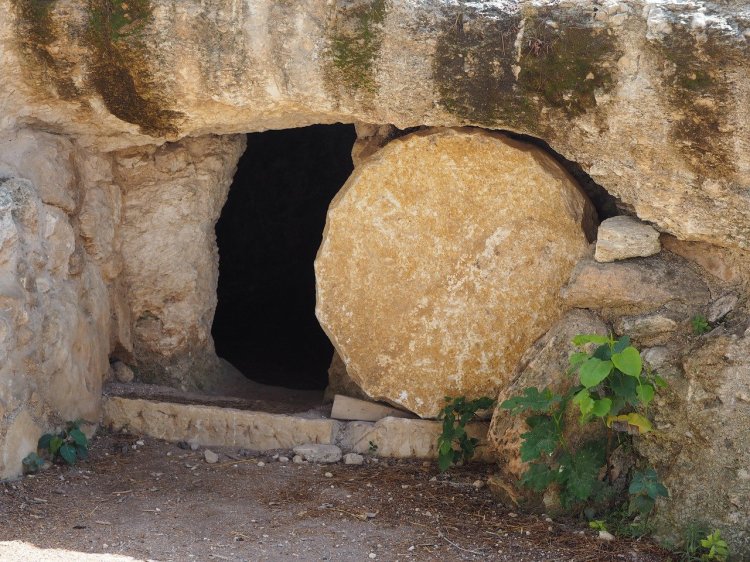
After his death we followed Joseph of Arimathea and Nicodemus as they carried the dead body to the tomb in which he was to be buried. We saw they rolled a large stone across the tomb. I doubt that even Samson could have rolled that stone away!

However, we were still sightly nervous. Jesus had told the crowds that after three days he would rise from the dead. Some of us feared that his disciples might steal the body and tell everyone that he was raised from the dead. We could not risk that happening. Therefore, we asked Pilate to seal the tomb and put some guards by the entrance until the third day. All our bases were covered now, and we could soon get back to normal life.

For the first time for a while, I was happy. Well at least I was until I heard about this morning’s events. The guards reported the news to us. There had been an earthquake at dawn and the guards saw an angel of the Lord roll aside the great stone. They were so scared they fainted. When they woke up the tomb was empty, and the body was gone.

We had an emergency meeting of the elders, gave a large bribe to the guards, and told them to say that while they were sleeping Jesus’ disciples came and stole the body during the night. Additionally, we told them that if the governor found out we would cover for them. Thankfully, the guards were happy to accept the bribe.

But as I lay here in bed, I am not convinced that the people will believe our version of events. The disciples all deserted Jesus when we arrested him. They ran away. I do not think anyone would seriously believe that they had the courage to attempt to take Jesus’ body from the tomb. Also, the strips of linen that had been covering his body and the cloth that had been wrapped round his head were still in the tomb. If they had stolen the body, why would they have removed those items?

The longer I think about what happened today the more I am convinced that the key thing is for us to find the body. We must find the body. Once we get hold of the body, we will display it publicly to squash any talk of Jesus being raised from the dead. Yet within me is a question that I am too frightened to contemplate. What happens if we cannot find the body? Logic says that if we cannot find it then the words of Jesus have been fulfilled. He has risen from the dead. I must find that body!

Image by Dozemode from Pixabay

The Crowd on Palm Sunday

As Jesus rode into Jerusalem on the day we remember as Palm Sunday, many people came out to greet him. Yet a few short days later instead of cheering Jesus, the crowd cried out for his crucifixion. It is an astonishing change in attitude from the crowd.

When I think about the crowd who greeted Jesus on Palm Sunday, I observe three different groups of people amongst them.

FIRSTLY: Disciples and the other followers of Jesus.

I am not just referring to the twelve disciples but also to the others who followed Jesus around. (For example in Luke 10 Jesus sent out seventy two people to spread the good news of the Kingdom of God. There were also the women mentioned in Luke 8:1-3 who supported Jesus financially e.g. Joanna, whose husband Chusa was Herod’s administrator; Susanna; and many other women).

Yes we all know that the disciples got things wrong and make mistakes. I guess that is because they are humans like us! However they were not naïve or stupid. They knew it was dangerous going up to Jerusalem. Mark 10:32 tells us that “that those who followed him were afraid.” Yet they still bravely followed Jesus.

I would imagine that when walking into Jerusalem on that first Palm Sunday they may well have felt nervous and worried about what might happen. However deep down they wanted to follow their master.

I wonder if we can identify with those disciples? We want to serve God but so often feel we are not adequate or feel scared. Or we just plain get it wrong on occasions!

SECONDLY: The crowd who spread their garments cheering Jesus

The Jewish people hated being ruled by the Romans. They wanted their freedom back. It was the week leading up to Passover, when they remembered God rescuing the Jewish people from slavery in Egypt. The religious and nationalistic expectations of the crowd would have been huge. The people had for years been longing for the Messiah to come and rescue them from the Romans. Could Jesus be their Messiah?

However the Messiah / King that the people were expecting was a military king, just like David. They were looking for the wrong type of king. Israel was looking for a king to defeat their enemies: the Romans. But Jesus did not regard the Romans as his enemies. Jesus’ enemies were the power of sin and death. These were the enemies that he came to fight and defeat.

His was a spiritual battle in which he would be going toe to toe with sin and death. They were the real enemies. These were the enemies that had brought misery to the human race and that Jesus would defeat.

We might ask the question: how could the crowd have turned against Jesus so quickly?

It is easy sometimes to worship God when He does what we think He should do; when God answers our prayers the right way (i.e. our way).

However what happens when our prayers are not answered in the way we think they should? What happens when Jesus does not “drive out our Romans?” Do we still praise Him then? Or do we allow ourselves to become either bitter or disappointed with God?

THIRDLY: The Pharisees and the religious rulers

If you study the life of Jesus in the four gospels, one thing that leaps out is that the Jewish religious leaders did not like Jesus!

Whenever Jesus performed a miracle and they had a chance to criticise it they did.

If we remember the amazing healing of the blind man in John 9 and the way that the Pharisees would not accept this miracle. You would imagine that they would have been overjoyed but no they were not.

There was the occasion when Jesus healed a man with a withered arm and the religious leaders were unhappy with this as the healing happened on the Sabbath. This grieved Jesus. (Mark 3)

It is difficult at times to comprehend what was wrong with them!

They seemed to think the way to God was through obeying rules. And don’t you dare break their rules or you are in trouble! (woe betide you!)

Yet I wonder are there occasions when we are like the Pharisees? Do we allow religious traditions to stop us from meeting Jesus? Does the fact that “we’ve always worshipped like that” prevent us from truly meeting Jesus in a fresh way? Do we search the scriptures like the Pharisees but refuse to come to the one who gives life? (John 5:40)

In closing which one of these three groups of people do we think most reflects us today?

National Day of Reflection

On Tuesday 23 March 2021 the UK had a national day of reflection to remember all those who had died in the pandemic. This date was chosen as it marked the anniversary of the announcement of our first Covid lockdown.

We had an online service last night at our church as part of the national day of reflection. During the service our vicar read some scriptures to us which I felt would be good to share this week. Hopefully you will find these verses helpful:

The Lord is my shepherd, I lack nothing. He makes me lie down in green pastures,
he leads me beside quiet waters, he refreshes my soul.
He guides me along the right paths for his name’s sake.

Even though I walk through the darkest valley, I will fear no evil, for you are with me;
your rod and your staff, they comfort me.

You prepare a table before me in the presence of my enemies.
You anoint my head with oil; my cup overflows.
Surely your goodness and love will follow me all the days of my life,
and I will dwell in the house of the Lord forever. (
Psalm 23)

Come to me, all you who are weary and burdened, and I will give you rest. Take my yoke upon you and learn from me, for I am gentle and humble in heart, and you will find rest for your souls. For my yoke is easy and my burden is light.” (Matthew 11:28-30)

Cast all your anxiety on him because he cares for you (1Peter 5:7)

God is our refuge and strength, an ever-present help in trouble. (Psalm 46:1)

He says, “Be still, and know that I am God;
I will be exalted among the nations,
I will be exalted in the earth.
” (Psalm 46:10)

Treating our Bibles like our mobile phones

Ever wonder what would happen if we treated our Bible like we treat our mobile phone?

What if we carried it around in our purses or pockets?

What if we flipped through it several times a day?

What if we turned back to go get it if we forgot it?

What if we used it to receive messages from the text?

What if we treated it like we couldn’t live without it?

What if we gave it to kids as gifts?

What if we used it when we travelled?

What if we used it in case of emergency?  …..

Oh, and two more things:

You never have to worry about the battery dying, it has eternal life.

And unlike our mobile phone, we don’t have to worry about our Bible being disconnected because GOD already paid the  bill.

Find Strength in God

And Saul’s son Jonathan went to David at Horesh and helped him find strength in God. (1 Sam 23:16)

Many people are finding life difficult at the moment. Last Monday was the day known as “Blue Monday”. According to psychologist Cliff Arnall the third Monday in January is the most depressing day of the year! Thus the name “Blue Monday”. Additionally, this year in the UK we are also in our third lockdown. Not really a great combination. Whether or not last Monday is the most depressing day is obviously not a fact but life is not easy for many at the moment.

What do we do in the current situation to cope in these difficult times?

Do we spend more time on social media?

Do we binge watch loads of stuff on Netflix?

Do we try and drown our sorrows by excessive drinking?

Do we go out for long walks everyday?

Do we spend all day in bed and just hope the situation improves?

David, before he came king, was facing a very difficult situation with King Saul. He was in the wilderness with his group of 600 men and Saul was searching for him with his army. We are told that day after day Saul was searching for David. This must have been a very difficult stressful time for David. Although David had known the presence of God with him, he was also, like you and I, a human being too. When you hear that someone is searching for you with the intention of killing you then it would be understandable if you got very worried and concerned.

And then we are told that Jonathan, Saul’s son, went to meet David at a place called Horesh and helped him find strength in God. We are not told what Jonathan did. Perhaps he reminded David of how God had given him victory over Goliath. Maybe he reminded David of the deliverance of the Israelites from the Egyptians. We are not told. It simply says that he “helped him find strength in God”

Three brief but important thoughts strike me from that verse:

Look to God

When we are facing problems we need to look to God for His help. We cannot do things in our strength. Many of us think we can. But we cannot. Our pride might not like that but it is true nevertheless.

Life might be a lot easier if we just recognised that. God’s strength is mighty, ours is not. Look to Him. Do not look to the solutions I mentioned earlier, instead we should be “fixing our eyes on Jesus, the pioneer and perfecter of faith.” (Hebrews 12:3)

We need others

We do not exist on our own as Christians. We are part of Christ’s family and share our faith with our brothers and sisters in Christ. Although we can meet God anywhere, He will often use others to help us and to be a blessing to us. You will never reach the point when you outgrow the need for the help and support of other believers.

Others need us

Jonathan was able to bless and help his friend. We should look to encourage and support our fellow believers, especially during these difficult days. Let us aim to encourage them to keep on going and not give up. Being a Christian is not just about us. There are others in our family we need to support.

Therefore encourage one another and build each other up, just as in fact you are doing.” (1 Thess 5:11)

Whatever situation you may be in today look to the Lord and find your strength in Him.

The Magi, Chief Priests and Teachers of the Law

Today is Epiphany, when the Western Church remembers the Magi visiting Jesus as described in Matthew 2. This is a very familiar piece of scripture which many of us have probably read or heard read to us dozens of times.

Last Sunday our sermon was preached from Matthew 2:1-12 and the preacher had some interesting thoughts about the chief priests and teachers of the law, mentioned below, who I had not previously thought much about before:

When he had called together all the people’s chief priests and teachers of the law, he asked them where the Messiah was to be born. “In Bethlehem in Judea,” they replied, “for this is what the prophet has written:

“‘But you, Bethlehem, in the land of Judah,
are by no means least among the rulers of Judah;
for out of you will come a ruler
who will shepherd my people Israel.’”

It is obvious from the response of the chief priests and teachers of the law that they were fully aware of where the Messiah was to be born. They knew the scriptures. However, strangely they did not seem to be interested in the journey of the Magi and meeting the child, to see if he was the fulfilment of the prophecies.

Why did they not ask to go along with the Magi? Bethlehem is only about 5 or 6 miles from Jerusalem. Surely that was not too long a journey to undertake to see if the Messiah had at last been born?

Why were they not excited and expectant on hearing about the star? They seem to have no spiritual hunger.

Were they like Herod and the rest of Jerusalem disturbed by this news?

Were they scared of losing their positions in the status quo?

Were they scared of the unknown?

Did they think that God could not possibly reveal the Messiah to gentiles?

Perhaps they were scared of how Herod would react? After all, he was not known as someone who was favourably disposed towards potential rivals!

Our preacher described the chief priests and teachers of the law as having “heads of knowledge and hearts of stone.” How very sad that they could quote the Bible but it did not seem to mean anything to them.

Is there a danger that perhaps we can know spiritual truths intellectually but not in our hearts? Do we quote Bible passages parrot fashion and not know their reality in our lives?

Compare that with the Magi who were overjoyed (v10) when they saw the star stopping over the place where Jesus was, and then bowed down and worshipped Christ offering their treasures to Him (v11).

As we go through 2021 let us not be like the chief priests and teachers of the law, but instead emulate the example of the Magi and seek Him eagerly.